
Thinking Machines Lab: Timeline of the $2B Seed Round, Tinker, and the January 2026 OpenAI Exodus

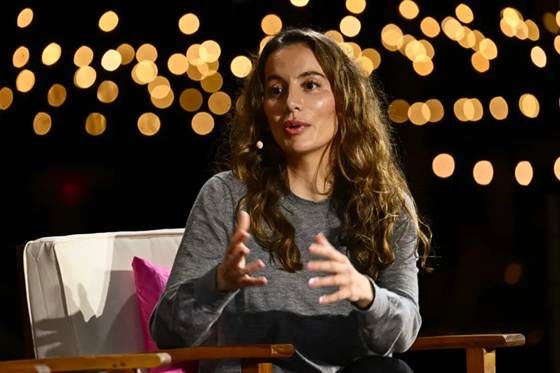
Thinking Machines Lab is a new artificial intelligence startup that has experienced a meteoric rise—and a turbulent fall—within the span of a single year. Founded in early 2025 by Mira Murati, OpenAI’s former Chief Technology Officer, the company quickly became one of the most hyped players in the AI ecosystem[1][2]. Backed by an all-star team of AI researchers and an unprecedented war chest of capital, Thinking Machines Lab was touted as a potential rival to the likes of OpenAI, Anthropic, and Google DeepMind. However, by early 2026 the startup was mired in internal turmoil: co-founders departed, employees streamed out, and plans for more funding faltered. The timeline below chronicles the company’s launch, its record-breaking funding rounds, major milestones, and the signs of trouble that led to an exodus – painting a vivid narrative of the volatility in today’s hype-driven AI startup scene.
Founding and Early Hype (Late 2024 – Early 2025)
September 2024: Mira Murati leaves OpenAI following the brief “Sam Altman ouster” episode (known internally at OpenAI as “the blip”). Murati had been a key player at OpenAI – leading projects like ChatGPT and DALL-E – and even served as interim CEO during the 2023 boardroom crisis[3][4]. Her departure signaled that she wanted to “do her own exploration” and set the stage for a new venture[3].
February 2025: Murati officially founds Thinking Machines Lab in San Francisco. The company emerged from stealth with ~30 researchers and engineers, many of them recruited from top AI labs including OpenAI, Meta AI, and the French startup Mistral AI[5]. The founding team read like an AI Who’s Who: John Schulman (OpenAI co-founder) joined as Chief Scientist, Barret Zoph (former OpenAI VP of Research) as CTO, along with renowned colleagues like Lilian Weng, Andrew Tulloch, and Luke Metz[2][6]. In a launch-day blog post, Murati outlined an ambitious mission to build “collaborative general intelligence” – AI that works with humans through natural interactions (conversation, vision, etc.) – and to create AI systems that are “more widely understood, customizable, and generally capable” than current models[7][8]. The company also emphasized AI safety and openness: it pledged to share research insights and tools with the community to prevent AI knowledge from being locked up in only a few big labs[9][10].
Governance and Structure: Thinking Machines Lab was established as a public benefit corporation (PBC) and set up to strongly empower its founder. Murati was given a deciding vote on board matters and founding shareholders held supervoting stock (100× voting power compared to regular shares)[11]. This structure meant Murati and her inner circle could maintain control over the company’s direction – a notable fact, as it shows investor trust in the founder. Industry observers remarked that Murati “reportedly has more board power than Zuckerberg had at Meta”, reflecting how in this AI boom, pedigree and trust in key individuals often trump traditional checks and balances[12].
Record-Breaking Seed Funding (Mid 2025)
July 2025: Just months after its inception, Thinking Machines Lab closed a record-breaking seed funding round. The startup raised an astonishing $2 billion in a seed round led by Andreessen Horowitz (a16z)[13]. The deal included a roster of prominent investors: Nvidia, AMD, Cisco, ServiceNow, Accel, and the quantitative trading firm Jane Street all piled into the round[14][15]. This investment valued the young company at approximately $12 billion post-money[13]. It was one of the largest first-round financings in Silicon Valley history – “the largest seed funding round in history,” according to Wired[16]. For context, this single seed round was 4× bigger than any previous seed in venture capital records[16], underscoring the fever pitch of investor appetite for AI in 2025.
This massive bet was placed before the company had any publicly available product or revenue – purely on the strength of Murati’s reputation and her team’s expertise. As Reuters noted, the funding underscored Murati’s “ability to attract investors in a sector where top executives have become coveted targets in an escalating talent war.”[17][18] In other words, investors were effectively funding people, not products. One veteran venture capitalist commented on LinkedIn: “$2B seed. No product. No revenue. No roadmap... That’s not investing. That’s speculation.” He argued this deal signaled that pedigree had replaced fundamentals, with Murati’s résumé serving as the entire investment thesis[19]. Indeed, the deal structure even included interesting players: the government of Albania (Murati’s home country) invested $10 million as part of the round – an unusual move that required Albania’s parliament to amend its national budget to become a startup investor[20].
The valuation also jumped higher than initially rumored. In June 2025, multiple outlets (e.g. Financial Times) reported that Murati was close to raising $2B at a $10 billion valuation[21]. By the time the round closed in mid-July, the valuation had leapt to $12 billion[14]. This late surge in valuation suggests competitive FOMO among investors – likely more firms wanted in once word got out, driving up the price. As one tech journalist quipped, “The VCs who poured $2B into Thinking Machines pre-launch are probably not having fun [right now].”[22] That remark (made in early 2026 when things soured) underscores how extraordinary – and risky – such a rich seed investment was.
Use of Funds: With $2 billion in fresh capital, Thinking Machines Lab suddenly had one of the biggest war chests of any AI startup. The company indicated it would spend heavily on computing infrastructure and talent. Indeed, it soon struck a deal with Google Cloud to provide the cloud GPU/TPU resources needed to train its AI models[23][24]. The team also continued to hire aggressively; by mid-2025 it had about 50 employees[25] (a large headcount for a months-old startup). The implicit expectation was that this money would fund the development of “frontier” AI systems – potentially training large-scale models rivaling GPT-4 or beyond. Murati hinted in July that the first product would arrive “in the next couple months” and include a “significant open source component” to benefit researchers and startups[26][27]. The stage was set for an ambitious debut.
First Product Launch: Tinker (October 2025)
October 1, 2025: After months of secrecy, Thinking Machines Lab launched its first product, an AI developer tool called “Tinker.” Tinker is a cloud-based API for fine-tuning large language models (LLMs)[28]. In essence, it automates and simplifies the process of customizing a frontier-scale AI model for specific tasks. “We believe [Tinker] will help empower researchers and developers to experiment with models and will make frontier capabilities much more accessible to all people,” Murati said at the product’s reveal[28][29].
What Tinker Does: Fine-tuning state-of-the-art models typically requires significant expertise in distributed training, access to large GPU clusters, and careful management of training runs. Tinker abstracts away much of that complexity. Users can write a few lines of code to send a fine-tuning job to the Tinker API, supplying their training data and choosing from supported base models[30]. Thinking Machines Lab runs the fine-tuning on its internal infrastructure and then lets the user download the resulting customized model[30]. At launch, Tinker supported at least two major open-source model families: Meta’s LLaMA and Alibaba’s Qwen[30]. It supported both supervised fine-tuning and reinforcement learning (RL) from human feedback loops for alignment[31][32]. One beta tester noted that “Tinker is definitely much simpler than doing the RL from scratch,” highlighting that it significantly lowers the barrier to entry for advanced model tweaking[33].
Open Source Stance: The introduction of Tinker also reinforced Thinking Machines Lab’s philosophy of openness. Unlike OpenAI’s closed models, Tinker leverages open-source models and encourages users to download and run their fine-tuned models wherever they want[31]. Murati expressed hope that “making what is otherwise a frontier capability accessible to all” would enable more innovation and help “reverse the trend of commercial AI models becoming increasingly closed.”[34][35] The company even started sharing some of its research openly – publishing technical findings on maintaining neural network performance at scale and more efficient fine-tuning methods, which underpin tools like Tinker[36].
Reception: Within the AI community, Tinker’s launch was met with interest, though perhaps not the same awe as the funding news. It was essentially a sophisticated infrastructure product – useful to AI developers, but not a consumer-facing breakthrough. Some noted that similar fine-tuning platforms already existed (e.g. Berkeley’s SkyRL), but beta users praised Tinker’s combination of power and ease of use[37][38]. Importantly, Tinker was the only publicly known product from Thinking Machines Lab at this point. The company still had not announced any proprietary foundation model of its own, nor any direct competitor to ChatGPT. (Indeed, as of early 2026, Tinker remains the startup’s only product, and the team “has yet to train a major foundation model” of their own[39].) In hindsight, this would become a critical factor: the startup had a huge valuation predicated on big AI breakthroughs, but by late 2025 it had delivered an AI tool rather than a breakthrough AI model.
Team Updates: Around this period, there were subtle signs of strain. One of the co-founding researchers, Andrew Tulloch, departed the company in fall 2025. In October, The Wall Street Journal reported that Tulloch had left Thinking Machines Lab to join Meta’s AI research division[40]. Tulloch had expertise in model pre-training and reasoning, and his exit to a big competitor (Meta was ramping up a new “superintelligence” lab) suggested that even with $2B in the bank, startup life was not necessarily paradise for all team members. Still, at the time this news was a footnote and did not publicly hint at deeper troubles.
Sky-High Valuations and Unfinished Funding (Late 2025)
November 2025: Flush with its initial success, Thinking Machines Lab sought to raise even more capital. Just four months after the $2B seed round, the company entered talks for a new funding round at an eye-popping $50 billion valuation[41]. This news, first reported by Bloomberg and Reuters in mid-November, implied that investors were considering more than quadrupling the company’s valuation on the back of its early momentum. Some sources speculated the valuation could even reach $55–60 billion before the deal was done[42].
The logic was that if Thinking Machines had demonstrated progress (the launch of Tinker and presumably work toward larger AI models), it might join the ranks of elite AI labs commanding tens of billions in value. For instance, OpenAI itself was rumored to be raising at valuations north of $80–90B around that time, and Anthropic had secured funding from Amazon at a ~$20B valuation. In that hype-charged climate, a $50B price tag for Murati’s startup – which boasted many ex-OpenAI stars – seemed aggressive but not impossible. Investors were evidently wagering that Thinking Machines Lab could be “the next OpenAI”, if not acquired by a Big Tech suitor first. (Notably, there were even rumors that Meta had held talks about acquiring Thinking Machines Lab outright to bolster its AI efforts, though no offer materialized[24].)
Stalled Round: Crucially, by the end of 2025, no such $50B round had closed. The Bloomberg report emphasized the talks were early and terms could change[43]. Indeed, in the ensuing weeks, questions arose that gave investors pause. Behind the scenes, Thinking Machines Lab was struggling to articulate a clear path to revenue or a defined product strategy beyond the Tinker tool[44]. By January 2026, outlets like The Information and Benzinga reported that the hoped-for mega-round had stalled amid these uncertainties[45][46]. In essence, the company’s valuation ambitions (up to $50–60B) were not matched by concrete business progress, raising the risk that the initial $12B valuation might have been too high. This funding snag would soon be overshadowed by an even bigger crisis: the implosion of the team itself.
Internal Tensions and Misalignment
By late 2025, hints of internal friction at Thinking Machines Lab began to surface:
Strategic Uncertainty: Sources indicate that the founding team never fully agreed on what to build or what the company’s core focus should be[47][48]. One insider described “discussions and misalignment on what the company wanted to build – it was about the product, the technology, and the future.”[49] In other words, some leaders may have wanted to prioritize research and training new AI models, while others emphasized pragmatic tools and business use-cases (like Tinker). This kind of fundamental divergence can be toxic for a startup, and it apparently simmered under the surface.
Pressure to Execute: Having raised such an enormous seed round, Murati’s team was under intense pressure to justify the valuation with rapid progress. Yet building cutting-edge AI systems is expensive and time-consuming. By end of 2025, OpenAI and Google were already deploying multimodal GPT-4 and other advanced models, while Thinking Machines had not showcased anything at that level. There were likely disagreements over timelines and priorities – whether to push for a big breakthrough (and potentially burn through the cash) or to take an iterative approach. This debate likely fed into the co-founder tensions.
Talent Raids: As mentioned, competitors were actively poaching talent. Tulloch’s defection to Meta was one example. In addition, OpenAI (under new leadership after the late-2023 saga) had every incentive to win back key people. It’s notable that John Schulman, a co-founder of Thinking Machines, had originally left OpenAI in 2022 and briefly worked at Anthropic before Murati recruited him[50]. Such back-and-forth movements illustrate how fluid and cutthroat the AI talent wars had become. This context set the stage for what came next – essentially, OpenAI “striking back” to reclaim talent from its would-be upstart rival.
The January 2026 Exodus: Co-founders Return to OpenAI
The situation at Thinking Machines Lab dramatically unraveled in January 2026, turning into one of the most talked-about AI industry implosions in recent memory. Key events unfolded in quick succession:
January 14, 2026 – Firing of the CTO: Mira Murati announced publicly on Jan. 14 that the company had “parted ways” with Barret Zoph, the co-founder and Chief Technology Officer[51]. In the same brief post (made on X, formerly Twitter), she introduced Soumith Chintala as the new CTO[52]. Chintala is a respected AI leader best known for co-creating PyTorch (Facebook’s open-source deep learning framework), and his appointment was positioned as a positive “new chapter.” “He is a brilliant and seasoned leader... We could not be more excited to have him take on this responsibility,” Murati wrote[53]. What Murati’s announcement did not mention were the circumstances behind Zoph’s departure.
Revelations of Misconduct: Reporting by Wired and others soon filled in the gaps. According to insider sources, Murati’s leadership believed Zoph had engaged in “serious misconduct” at the company in late 2025[54]. This breach of trust severely damaged the working relationship between Murati (CEO) and Zoph (CTO)[54]. Wired reported that Murati actually fired Zoph on Jan. 14 – before she knew he was already planning to leave for OpenAI – citing issues that arose after the alleged misconduct[54][55]. Additionally, Thinking Machines Lab internally raised concerns about whether Zoph “had shared confidential company information with competitors.”[56] (There is no public evidence of what information was involved, and Zoph did not comment to the press. OpenAI, for its part, stated it did not share those ethical concerns about Zoph when hiring him back[57].)
OpenAI Rehires Co-founders: Mere hours after Murati’s announcement, OpenAI revealed it had re-hired Barret Zoph. Fidji Simo, OpenAI’s Head of Applications, posted on X excitedly welcoming Zoph “back to OpenAI”, along with Luke Metz (another Thinking Machines co-founder) and researcher Sam Schoenholz[58]. Simo wrote, “This has been in the works for several weeks, and we’re thrilled to have them join the team,” implying these staff had approached OpenAI or vice versa well before the public announcement[58]. In effect, three key members of Thinking Machines Lab’s small senior team were suddenly returning to their former employer en masse. It was described as a “raid” on Murati’s startup – an unprecedented move of talent boomeranging back to a previous company[59][60].
Immediate Aftermath – More Resignations: The next day, January 15, 2026, Murati convened an all-hands meeting to address the team about these departures[61]. According to Alex Heath (a tech journalist who closely tracked the saga), the all-hands meeting “went sideways.” Some employees were so unsettled that they resigned on the spot, before the Q&A even started[61][48]. Within the same week, at least two more engineers – Lia Guy (AI researcher) and Ian O’Connell (infrastructure engineer) – decided to leave Thinking Machines and return to OpenAI as well[62]. What began as three co-founders exiting quickly snowballed into a broader staff exodus.
Root Causes – “Not Just One Person”: While Zoph’s alleged misconduct might’ve been the spark, insiders suggested the problems ran deeper. One source told Wired that “this has been part of a long discussion at Thinking Machines.” The recent personnel changes were “not wholly related to Zoph” but rather reflected long-running debates and misalignment within the company about its product direction and future plans[63][47]. In other words, Zoph’s exit brought to light a leadership failure: the founders had never united around a coherent vision for what the $2B was supposed to build. That structural issue set the stage for disillusionment and departures.
Comparison to Industry Drama: The drama at Thinking Machines Lab drew comparisons to other high-profile sagas. Some likened it to the internal turmoil at OpenAI itself (which had gone through the Altman board coup and reversal in 2023)[64]. Others noted that several AI labs have seen co-founders leave amid strategic disagreements – examples include departures at Elon Musk’s xAI, Ilya Sutskever’s Safe AI lab, and even Yann LeCun’s reduced role at FAIR[65]. In Silicon Valley lore, such talent wars evoked memories of 1990s Microsoft poaching Borland’s top engineers – “A plunder is underway,” tech veteran Robert Scoble tweeted about OpenAI’s moves, “This feels like when Bill Gates hired away Borland’s best engineers.”[66] The Thinking Machines episode underscored that the AI sector, while booming, is also incredibly volatile and rife with “Game of Thrones” style power shifts.
Failed Funding & Financial Uncertainty: Compounding the human turmoil, Thinking Machines Lab’s financial situation was turning concerning. By January 2026 it became widely reported that the startup had been unable to secure new funding to follow the seed round[44]. In fact, the company had been “struggling over the last couple of months to raise a new round of financing,” according to Alex Heath’s reporting[67]. With the $50B valuation deal stalled, there were rumors (perhaps overblown) that the startup might even be tight on cash. One observer on a tech forum quipped, “They raised a $2B seed 6 months ago… and they’re out of money. It’s January.”[68]. That was likely an exaggeration – burning through $2B in half a year would be extreme – but it reflects the doubt and skepticism that set in. What is clear is that no new capital had come in, and the combination of no new money + key people leaving cast serious doubt on the company’s future. As a result, Thinking Machines Lab’s notional valuation (still $12B on paper from the last round) was effectively in freefall – any future investment would almost certainly reset the valuation much lower unless the team pulled off a dramatic turnaround.
Public Sentiment and Commentary
The rise-and-fall of Thinking Machines Lab became a talking point across tech circles, illustrating both the irrational exuberance and the harsh realities of the current AI boom. A variety of social media posts and commentary help illuminate the narrative:
Investor Skepticism: When the $2B seed was announced, some veteran investors openly questioned the wisdom of such a deal. On LinkedIn, investor Ashish Saboo wrote a viral post calling the round “expensive FOMO” and lamenting that “we’re funding people, not businesses… This is beyond pre-revenue. It’s pre-everything. Pure bet on human capital.”[12] Saboo noted that Murati’s pedigree was essentially the entire thesis for investors, and warned, “When everyone’s buying the same story, someone’s going to be left holding the bag.”[69] His words proved prescient by January 2026, when the “story” indeed hit a wall. (Others rebutted Saboo at the time, arguing that in frontier tech, backing talented people with big visions is sometimes the right call. The debate underscored a split between visionary capital vs. prudent fundamentals.)
Tech Press Reactions: The tech media covered Thinking Machines Lab’s turmoil closely, often with a sense of irony. After the January exodus, Forbes reporter Alex Konrad wryly tweeted, “The VCs who poured $2B into Thinking Machines pre-launch are probably not having fun rn 😳.”[22] The emoji summed up the discomfort of those investors who had chased the hype. TechCrunch headlined the story bluntly: “Mira Murati’s startup… is losing two of its co-founders to OpenAI.”[70] Publications like The Information and Wired ran analyses on how this incident “tests investor appetite” for sky-high valuations[71] and what it says about the state of the AI talent wars.
Community Comparison to Competitors: AI researchers and enthusiasts also drew comparisons to other companies. One commentator on X highlighted that Anthropic, another OpenAI-splinter startup, had retained its founding team without any similar drama, despite also dealing with funding constraints and high pressure[72]. “The thinking machines situation is an unintentional tell about Anthropic,” they wrote, noting that “not a single cofounder or high-salience figure has visibly departed [Anthropic]… If you can’t retain talent that … get more valuable together over long horizons, then far-out goals become very difficult.”[72] This was a pointed observation: retaining key talent is seen as essential for any ambitious R&D-driven startup, and losing multiple co-founders so early was a red flag about Thinking Machines Lab’s leadership and culture.
Reddit and Forums: On forums like Reddit (e.g. r/MachineLearning and r/Singularity), discussions popped up analyzing what went wrong. Some redditors speculated that “maybe they over-hired ex-OpenAI folks who preferred OpenAI’s direction after all,” or that “$2B without a clear plan was doomed – they became complacent.” Others defended Murati, suggesting that the OpenAI ‘raid’ was opportunistic and that Thinking Machines Lab could still pivot and succeed with the remaining team. Overall public sentiment combined surprise, schadenfreude, and concern – surprise at how quickly a star-studded startup unraveled, a bit of schadenfreude from skeptics who felt the hype was overblown, and concern that this kind of boom-bust could undermine confidence in AI ventures broadly.
Current Status and Outlook (Early 2026)
As of the start of 2026, Thinking Machines Lab’s future is highly uncertain. The company that less than a year prior was heralded as a potential “next OpenAI” has instead become a cautionary tale about hype in the AI sector. Here is where things stand:
Leadership and Team: Mira Murati remains CEO, now leading a greatly diminished team. Of the original five co-founders she announced in 2025, only one – John Schulman – is still at the company as chief scientist[73]. Soumith Chintala, the new CTO, brings respected expertise and presumably is working to refocus the technical roadmap. However, the loss of Zoph (who was leading post-training research) and Metz (a key model engineer) means the startup’s brain trust has been dented. The total headcount has likely shrunk from its peak (~50) as multiple employees resigned or returned to prior companies. This puts stress on ongoing projects and morale.
Product and Technology: The Tinker platform is still operational and could be commercialized further. In fact, it might represent a path to revenue if enterprises or researchers pay for large-scale fine-tuning jobs. But it’s worth noting that Tinker is essentially an AI infrastructure service, not a consumer AI product – its market may be limited to other AI developers. The grander vision of building new multimodal or frontier AI models is in question. With reduced staffing and possibly more limited compute resources (depending on how much of that $2B remains unspent), it’s unclear if Thinking Machines Lab will continue trying to train a giant model from scratch. As of now, no new foundation-model breakthrough has been announced – a fact pointed out by critics when comparing the company’s output to its lofty goals[39].
Financial Runway: On paper, having raised $2B, the company should have substantial runway left (perhaps on the order of years of operating expenses, even with a large AI R&D burn rate). There is no indication that they literally ran out of cash by early 2026. However, perception matters: failing to land the follow-up funding round was a blow. It suggests that at a $50B valuation ask, investors balked – meaning Thinking Machines might have to settle for a “down round” or a much smaller infusion if it seeks new capital later. Alternatively, the company could tighten its belt and attempt to achieve a milestone (say, a successful large model training run or significant customer adoption of Tinker) to regain momentum. In the worst case, some speculate an acqui-hire by a larger player could happen if the company cannot find a sustainable path on its own – effectively returning to Saboo’s observation that “if this fails, Big Tech will pay $2B+ just for the talent”[12] (though that price would now be heavily discounted given the talent departures).
Ecosystem Impact: The rise and stumble of Thinking Machines Lab highlights the volatility of the current AI startup ecosystem. It serves as a reminder that enormous funding and talent accumulation do not guarantee success – a clear vision and execution are equally critical. The AI field in 2025–2026 has been characterized by extremes: extreme valuations, extreme competition for talent, and extremely fast shifts in fortune. As Wired noted, many AI researchers are feeling “exhausted by the constant drama in their industry”[64]. Startups are born in hype and sometimes crater just as dramatically.
In summary, Thinking Machines Lab’s trajectory from hyped launch to a troubled moment encapsulates the boom-bust dynamics of the AI gold rush era. It started with a dream team and a mountain of cash, aiming to challenge the incumbents with new ideas about open, collaborative AI. It hit extraordinary highs – a $12B valuation with zero products – and now faces sobering lows – key talent gone and its grand plans in jeopardy. Yet, it’s not over for Thinking Machines Lab: Murati and her remaining team still have resources and expertise that most startups could only dream of. The coming year will determine whether they can regain the narrative (perhaps with a research breakthrough or a successful pivot) or whether this startup will be remembered as a high-profile cautionary tale of AI hype. Regardless, its story so far has vividly illustrated the rise-and-fall pattern of hype-driven companies in today’s AI landscape – where the only constant is rapid change, and even the most vaunted newcomers can “blow up” almost as fast as they ascended.
Sources
· Thinking Machines Lab founding details and mission – TechCrunch (Feb 18, 2025)[7][9]; Wikipedia[1][5]; Wired[3].
· Funding rounds and investors – TechCrunch (Jul 15, 2025)[74][14]; Reuters[18][17]; Wired[16]; Wikipedia[20].
· Product launch (Tinker) – Wired (Oct 1, 2025)[28][30]; Wikipedia[75].
· Attempted $50B raise – Reuters[41][43]; Implicator.ai[46].
· Co-founder departures & OpenAI re-hires – Inc. (Jan 16, 2026)[52][58]; Wired (Jan 15, 2026)[54][57]; TechCrunch[70].
· Employee exodus and internal issues – Implicator.ai[47][48]; Benzinga[44]; Techmeme/X posts[22][72].
· Social media and commentary – LinkedIn post (Jul 2025)[12][69]; Techmeme (tweets)[22][66]; Wired[64].
[1] [5] [11] [20] [25] [50] [75] Thinking Machines Lab - Wikipedia
https://en.wikipedia.org/wiki/Thinking_Machines_Lab
[2] [6] [16] Thinking Machines Lab Raises a Record $2 Billion, Announces Cofounders | WIRED
https://www.wired.com/story/thinking-machines-lab-mira-murati-funding/
[3] [7] [8] [9] [10] [70] Thinking Machines Lab is ex-OpenAI CTO Mira Murati’s new startup | TechCrunch
https://techcrunch.com/2025/02/18/thinking-machines-lab-is-ex-openai-cto-mira-muratis-new-startup/
[4] [28] [29] [30] [31] [32] [33] [34] [35] [36] [37] [38] Exclusive: Mira Murati’s Stealth AI Lab Launches Its First Product | WIRED
https://www.wired.com/story/thinking-machines-lab-first-product-fine-tune/
[12] [19] [69] $2B seed for Thinking Machines Lab. Is this visionary or FOMO? | Ashish Saboo posted on the topic | LinkedIn
[13] [14] [21] [23] [24] [26] [74] Mira Murati’s Thinking Machines Lab is worth $12B in seed round | TechCrunch
https://techcrunch.com/2025/07/15/mira-muratis-thinking-machines-lab-is-worth-12b-in-seed-round/
[15] [17] [18] [27] Mira Murati’s AI startup Thinking Machines valued at $12 billion in early-stage funding | Reuters
[22] [62] [66] [67] [68] [72] Techmeme: Sources: Thinking Machines lacks a clear product or business strategy and has been struggling over the past couple of months to raise a new round of financing (Alex Heath/Sources)
https://www.techmeme.com/260115/p53
[39] [44] Mira Murati’s Thinking Machines Reportedly Faces Exodus As Employees Consider Following Founders Back To OpenAI Amid Funding Struggles - Benzinga
[40] [41] [42] [43] Mira Murati’s Thinking Machines seeks $50 billion valuation in funding talks, Bloomberg News reports | Reuters
[45] [46] [47] [48] [49] [61] [73] Thinking Machines Exodus Deepens: The Founders Never Agreed on What to Build
[51] [52] [53] [58] AI Startup Faces Staff Exodus 6 Months After $2 Billion Funding Round
https://www.inc.com/ava-levinson/thinking-machine-labs-staff-exodus/91289207
[54] [55] [56] [57] [59] [60] [63] [64] [65] Inside OpenAI’s Raid on Thinking Machines Lab | WIRED
https://www.wired.com/story/inside-openai-raid-on-thinking-machines-lab/
[71] Thinking Machines Exodus Tests Investor Appetite for a $50 Billion Valuation — The Information